Finlay Watches
Finding the right watch size
Two watches with the same diameter can feel surprisingly different. One sits neatly on the wrist; the other seems to reach past it. The difference is often in the lugs, the thickness or the way the bracelet starts to curve.
Diameter is a useful starting point. Lug-to-lug helps finish the picture.
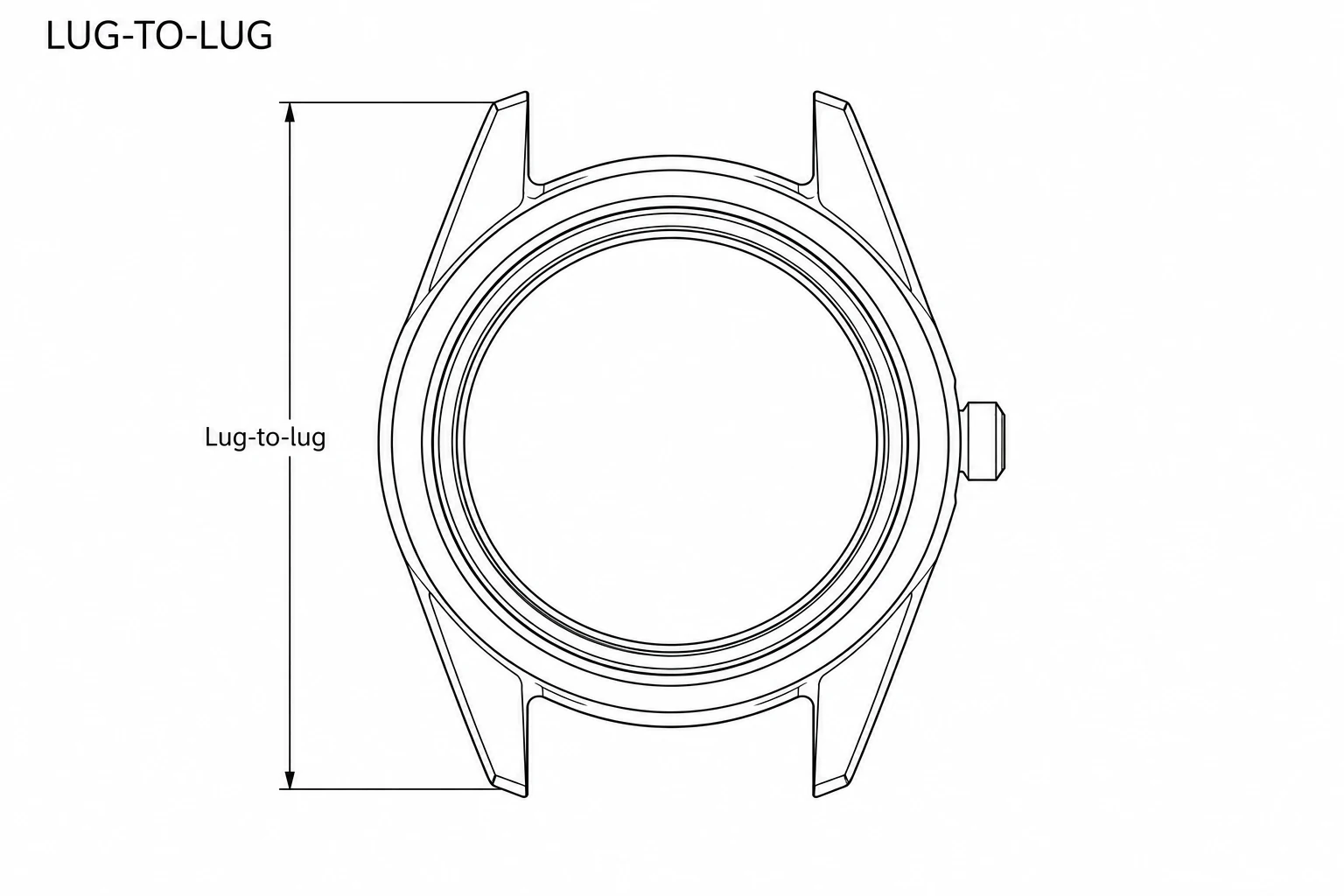
Width and length do different jobs
Case diameter is the width across a round watch, usually without the crown. Lug-to-lug runs in the other direction, from the tips of the upper lugs to the tips of the lower ones. It is the length of the case along your wrist.
A watch with a broad dial and short lugs can have a compact footprint. A smaller dial with long, straight lugs can stretch further than the diameter suggests.
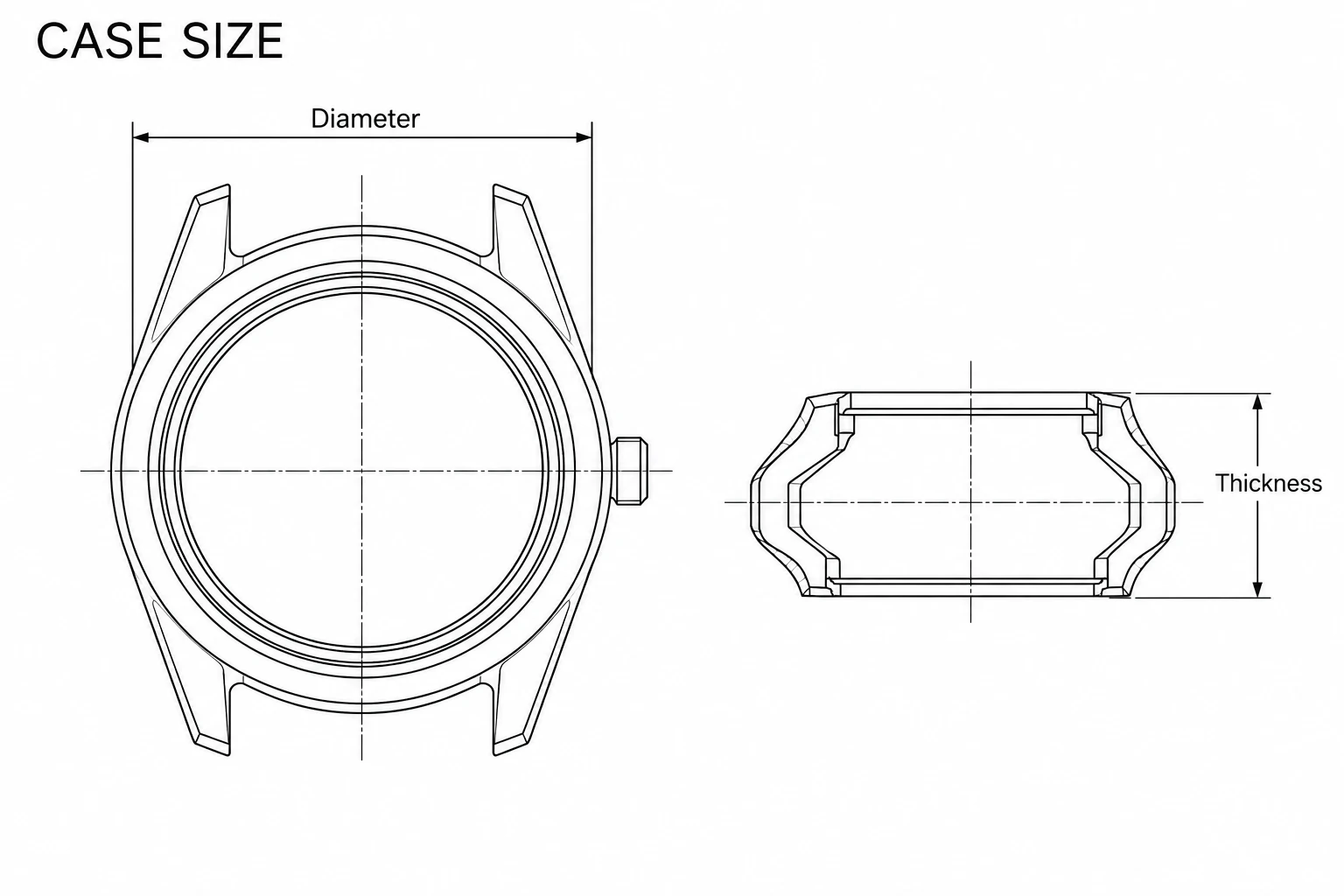
The shape between the numbers
Thickness changes the profile. Curved lugs help a case follow the wrist. A soft strap drops away from the case differently from a bracelet with a rigid first link.
The Tissot PRX is a useful example. Its first bracelet links extend past the case before they articulate, adding to the span on the wrist. A case-only lug-to-lug measurement describes one part of that shape, rather than the whole length of the rigid section.
Start with a watch you already enjoy wearing
Measure its width and lug-to-lug, then compare those proportions with the watch you are considering. A paper outline can help you picture the footprint. The numbers become much more useful when you have a familiar point of reference.
Bracelet fit is a separate part of the choice. Removing a link changes the circumference; it does not change the length of the case. That is why both the head of the watch and the bracelet deserve a look.
Try the proportions in our collection
- Casio AQ-230 Light Blue · AQ-230A-2A1MQYES — A$79 · Available — case 38.8 × 29.8 × 8.1 mm · lug-to-lug 38.8 mm
- Casio AQ-230 White · AQ-230A-7DMQYES — A$79 · Available — case 38.8 × 29.8 × 8.1 mm · lug-to-lug 38.8 mm
- Citizen Promaster Dive Black · BN0266-07E — A$469 · Available — case 40.6 mm · lug-to-lug Approx. 47.5 mm
- Seiko 5 Sports Blue · SRPD51K1 — A$449 · Available — case 42.5 mm · lug-to-lug 46.0 mm
- Timex Marlin Chronograph Ice Blue · TW2Y66500 — A$369 · Available — case 40 mm · lug-to-lug 48 mm
- Citizen Zenshin Chronograph Salmon · CA4610-85Z — A$419 · Available — case 42.5 mm · lug-to-lug Approx. 44 mm (case only)
- Bulova Prestige Chronograph Green · 96B409 — A$399 · Available — case 44 mm · lug-to-lug Approx. 50 mm
For a closer look at the parts themselves, explore our illustrated anatomy of a watch.